
The mobile app development industry is constantly evolving, and it is important for businesses to stay up to date with the latest trends and technologies in order to remain competitive. In this article, we will take a look at some of the most important trends in mobile app development that businesses should be aware of. Artificial Intelligence and Machine Learning One of the biggest trends in mobile app development is the integration of artificial intelligence (AI) and machine learning (ML). These technologies are becoming more accessible and easier to implement, and they have the potential to revolutionize the way that mobile apps are developed and used. AI and ML can be used to improve the user experience by providing personalized recommendations, improving user engagement, and reducing app crashes. They can also be used to improve app performance and security by detecting and preventing malicious activity. Increased Focus on User Experience Another important trend in mobile app development is the increased focus on user experience (UX). This means that developers are paying more attention to the overall user experience of an app, from the design and navigation to the functionality and performance. The goal is to create an app that is not only useful and functional but also enjoyable and intuitive to use. This requires careful consideration of user needs and behavior, and the use of the latest design trends and technologies. Cross-Platform Development Cross-platform development is another key trend in mobile app development. This refers to the development of apps that can run on multiple platforms, such as iOS, Android, and Windows. The goal of cross-platform development is to reach as many users as possible and to make it easier for businesses to manage their app development efforts. Cross-platform development can be achieved through the use of platforms such as React Native, Xamarin, and Flutter, which allow developers to create native apps for multiple platforms using a single codebase. Cloud Computing and the Internet of Things Cloud computing and the Internet of Things (IoT) are two other important trends in mobile app development. These technologies enable businesses to store and process large amounts of data in the cloud, and to connect devices and sensors to the Internet. This opens up new opportunities for businesses to create innovative and interactive mobile apps that can integrate with other technologies and systems. For example, an IoT-enabled app could use sensor data to provide users with real-time information about the environment or their health or to control smart devices in their homes. You will also Like : Boost Your Web Development Efficiency: The Top 10 Tools You Need to Know Conclusion The mobile app development industry is constantly changing, and it is important for businesses to stay up to date with the latest trends and technologies in order to remain competitive. By integrating AI and ML, focusing on user experience, utilizing cross-platform development, and embracing cloud computing and the IoT, businesses can create innovative and engaging mobile apps that deliver value to their users. If you like this post then you may also like to share the same with your colleagues. Let us know your thoughts on our blogs and on social media posts on Instagram, Facebook, LinkedIn, and Twitter.
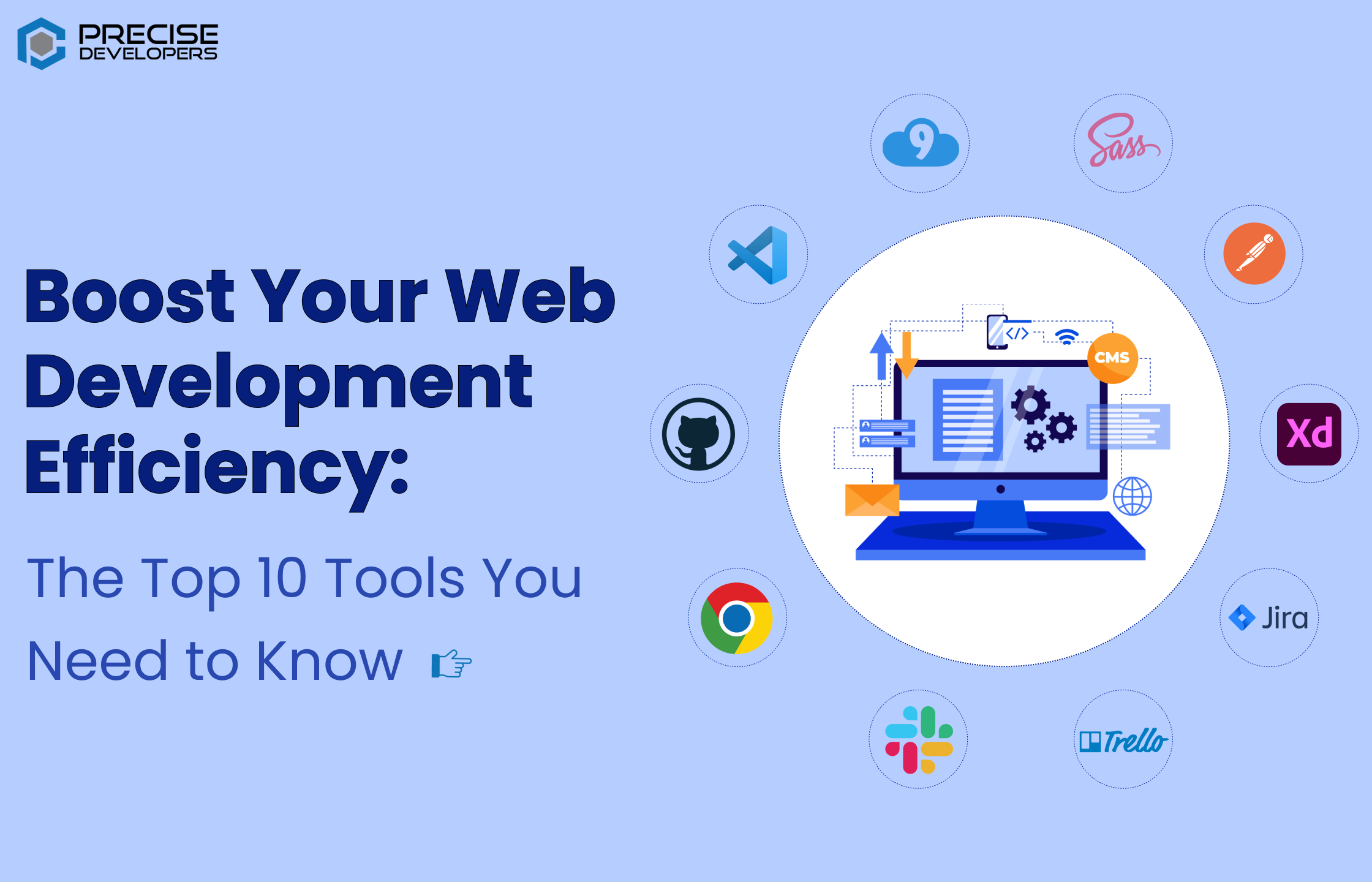
Web developers require a variety of tools to build and maintain websites and web applications. From code editors to project management, it’s essential to have the right tools to work more efficiently and productively. In this guide, we’ll highlight the top 10 essential tools for web development. Conclusion: Web development requires a variety of tools to construct and maintain websites and web applications. From code editors to project management, it’s crucial to have the right tools to work faster and more efficiently. In this guide, we’ve highlighted the top 10 must-know web development tools to help you improve your workflow and productivity. If you like this post then you may also like to share the same with your colleagues. Let us know your thoughts on our blogs and on social media posts on Instagram, Facebook, LinkedIn, and Twitter.

As a website owner, it’s important to understand the impact that website performance can have on your online presence. A slow-loading website not only frustrates visitors but can also negatively impact your search engine rankings. The following statistics highlight the importance of website performance optimization: With these statistics in mind, it’s clear that website performance optimization is crucial for both user experience and search engine optimization. This guide will discuss some of the most effective strategies for optimizing your website’s performance and improving your SEO. By implementing these tips and techniques, you can significantly improve your website’s performance and speed, which in turn will improve your SEO and provide a better user experience for your visitors. So start optimizing your website today and enjoy the benefits of a fast, efficient online presence! Checkout Our Recent Post: If you like this post then you may also like to share the same with your colleagues. Let us know your thoughts on our blogs and on social media posts on Instagram, Facebook, LinkedIn, and Twitter.

Progressive Web Apps, or PWAs, have been gaining popularity in recent years as a new way to create web-based apps that look and feel like native apps. PWAs are web applications that can be added to the home screen of a device, work offline, and have native-like features such as push notifications. One of the main benefits of PWAs is that they provide a better user experience compared to traditional web apps. PWAs are fast and responsive, allowing users to interact with them like a native app even when offline or on a slow connection. They also allow for push notifications, which can help increase engagement and retention. Another benefit of PWAs is that they are easy to create. Unlike native apps, PWAs don’t require going through app stores and can be created using standard web technologies such as HTML, CSS, and JavaScript. This means that web developers can use their existing skills to create PWAs, saving companies time and money. To create a PWA, developers need to follow the following steps: You may like: The Importance of Responsive Web Design: How to Optimize Your Website for Mobile Users In conclusion, Progressive Web Apps (PWAs) are a great way to create web-based apps that look and feel like native apps. PWAs provide a better user experience and can help increase engagement and retention. They are also easy to create using standard web technologies, which can save time and money for companies. By following the steps outlined above, web developers can create PWAs that can improve the user experience and provide a new way for businesses to reach their customers. As more and more companies start to adopt PWAs, it’s important for web developers to learn about this technology and understand how to create them. Progressive Web Apps are the future of web development, unlocking the power of web technologies to create exceptional experiences for users. It’s time for web developers to take advantage of this technology and create PWAs that can help businesses stay competitive and reach new heights. Checkout Our Recent Post: If you like this post then you may also like to share the same with your colleagues. Let us know your thoughts on our blogs and on social media posts on Instagram, Facebook, LinkedIn, and Twitter.

Vercel is a cloud platform that allows developers to host static sites and web applications with ease. In this guide, we’ll show you how to host a React.js app on Vercel for free. Whether you’re just getting started with React or looking for a convenient hosting solution, Vercel has you covered. Step-by-Step Guide: Congratulations! You’ve now learned how to host a React.js app on Vercel for free. Vercel makes it easy to get your app up and running in no time, with a simple deployment process and customizable project settings. So why wait? Start hosting your React.js app on Vercel today and take the first step towards building a successful web application. Our 5 Top Trending Blogs : If you like this post then you may also like to share the same with your colleagues. Let us know your thoughts on our blogs and on social media posts on Instagram, Facebook, LinkedIn, and Twitter.

Angular is a powerful and widely-used JavaScript framework for building web applications. As a developer, you know that Angular is known for its ability to create complex and high-performing web apps with ease. The latest version of Angular, 15.1.0, brings new features and improvements to the framework, making it easier and more efficient for developers to build robust applications. In this blog post, we will dive into the key features of Angular 15.1.0 and what they mean for developers. We’ll discuss the latest updates and enhancements to the Angular compiler, faster testing, improved type checking, new features in the Angular CLI, and more. By the end of this post, you will have a clear understanding of what’s new in Angular 15.1.0 and how you can take advantage of these features to improve your development process and build better web applications. Introduction: Angular 15.1.0 is the latest version of the Angular framework and is a minor release that includes bug fixes, performance enhancements, and new features. This release is aimed at improving the developer experience and increasing the overall performance of the framework. Upgrading to Angular 15.1.0 is recommended for all Angular users. Features: Conclusion: Angular 15.1.0 is a minor release that brings several important new features and improvements to the Angular framework. These improvements include faster testing, improved type checking, new features in the Angular CLI, and new features for the core framework. Additionally, Angular 15.1.0 also includes accessibility improvements, which makes it more inclusive. Upgrading to Angular 15.1.0 is highly recommended for all Angular users, as it will help to improve the performance and overall developer experience of their applications. As always, when it comes to a new release it is important to read through the official documentation as it has a complete and more exhaustive list of changes, improvements, and new features. Checkout Our Recent Post: If you enjoyed this post, consider sharing it with your colleagues. We’d love to hear your thoughts on our blog as well as our social media posts on Instagram, Facebook, LinkedIn, and Twitter.

Web development is a rapidly growing field with increasing demand for skilled professionals. While a formal education in computer science or web development can be beneficial, it is not always necessary to become a web developer. With the right skills and knowledge, it is possible to break into the field without a degree. In this blog post, we will discuss the different steps and tips on how to become a web developer without a degree in 2023. Additionally, we will also give an overview of the different types of web developers, such as front-end, back-end, full-stack, mobile, e-commerce, cloud and AI/ML developers, and what they do. Whether you’re just starting out or looking to make a career change, this post will provide valuable insight into the world of web development and how to succeed in it. Learn the basics: It is essential to have a strong understanding of the basics of web development. This includes understanding how the internet works, the basics of programming languages such as HTML, CSS, and JavaScript, and the basics of web development frameworks such as Angular and React. Online resources like Codecademy, FreeCodeCamp, and W3Schools are great places to start learning the basics. Build a portfolio: Having a portfolio of your work is crucial for finding a job as a web developer. It demonstrates your skills and experience, and it can be a powerful tool in landing a job. Use sites like GitHub and CodePen to build your portfolio and showcase your work to potential employers. Participate in coding challenges: Participating in coding challenges and hackathons can help you develop your skills and demonstrate your abilities to potential employers. Websites like HackerRank, CodeFights, and Codewars offer a wide variety of coding challenges for different skill levels. Join a coding Bootcamp: Coding boot camps are intensive, short-term training programs that can help you develop the skills and knowledge needed to become a web developer. Bootcamps typically cover a wide range of topics and are a great way to get a comprehensive understanding of web development. Network: Networking with other web developers, attending meetups, or joining online forums can help you learn about job opportunities and stay updated on the latest developments in the industry. Websites like Meetup, LinkedIn, and Reddit are great places to network and connect with other web developers. Practice: Lastly, practice, practice, practice. The more you work on actual projects and build real-world applications, the more you will learn and improve your skills. Websites like Freelancer and Upwork allow you to bid on web development projects and gain real-world experience. It is important to remember that becoming a web developer is not a one-time accomplishment, but a continuous journey of learning and improvement. The field is constantly evolving, and it’s essential to stay updated with the latest technologies and trends. With dedication, perseverance, and the right skills, it is possible to become a web developer without a degree in 2023. As you gain experience and skills, you may find that you are drawn to certain types of web development. Here is a brief overview of the different types of web developers: Front-end developers: These developers focus on the user-facing aspect of web development and are responsible for the look and feel of a website. They use technologies such as HTML, CSS, and JavaScript to build and design user interfaces. Back-end developers: These developers focus on the server side of web development and are responsible for the functionality and logic of a website. They use languages such as PHP, Ruby, and Python to build and maintain the server-side logic. Full-stack developers: These developers have a comprehensive understanding of both the front-end and back-end of web development. They can work on both the design and functionality of a website. Mobile web developers: These developers focus on building websites and web applications that are optimized for mobile devices. They use technologies such as HTML5, CSS3, and JavaScript to create responsive and user-friendly mobile web experiences. E-commerce developers: These developers specialize in building and maintaining e-commerce websites. They are responsible for integrating payment gateways, managing inventory, and ensuring the security of online transactions. Cloud developers: These developers focus on building and maintaining cloud-based applications and services. They use technologies such as AWS, Azure, and Google Cloud to build and manage scalable and reliable web applications. Artificial Intelligence/Machine Learning Developers: These developers focus on applying AI and machine learning concepts to build and maintain web applications that can process, analyze, and learn from data. No matter which type of web development you choose to specialize in, it is important to continue learning and expanding your skills. Stay updated on the latest technologies and trends, and continue building your portfolio and network. Remember, becoming a web developer is not a one-time accomplishment, but a continuous journey of learning and improvement. With dedication, perseverance, and the right skills, it is possible to become a web developer without a degree in 2023. It’s important to note that it is not essential to have a degree in computer science or web development to become a web developer. With the right skills, knowledge, and experience, it is possible to break into the field and succeed as a web developer. It’s also important to note that web development is a field with a diverse range of specializations that one can take as per their interest. With dedication, hard work, and consistent learning, anyone can become a web developer without a degree in 2023. You may also like: Angular 15.1.0 and its features If you found this post informative and helpful, you may want to share it with your peers. We welcome feedback and opinions on our blog as well as on our social media platforms such as Instagram, Facebook, LinkedIn, and Twitter.
In today’s digital age, the terms Artificial Intelligence (AI) and Machine Learning (ML) are being thrown around quite frequently. They are often used interchangeably, but there are distinct differences between the two. In this blog, we will explore the key differences between AI and ML, their individual capabilities and limitations, and how they are shaping the future of technology. We’ll also take a closer look at the real-world applications of AI and ML and how they are impacting various industries. This blog is intended for anyone interested in learning more about the future of technology and the role AI and ML will play in it. Whether you’re a technology enthusiast, a business professional, or a student, this blog will provide valuable insights into the current state and future potential of AI and ML. Machine learning and Artificial Intelligence (AI) are two closely related but distinct fields of study. Machine learning is a subset of AI that focuses on the development of algorithms and statistical models that enable computers to learn from data and make predictions or decisions without explicit programming. AI, on the other hand, is a broader field that encompasses machine learning, but also includes other areas such as natural language processing, computer vision, and robotics. Examples of Machine learning: Examples of Artificial Intelligence: Pros of Machine learning: Cons of Machine learning: Pros of Artificial Intelligence: Cons of Artificial Intelligence: In conclusion, both machine learning and AI are powerful technologies that have the potential to revolutionize many industries. However, it is important to keep in mind that these technologies are not without their limitations. Machine learning is a subset of AI, which is focused on developing algorithms and models that enable computers to learn from data and make predictions or decisions. AI, on the other hand, is a broader field that encompasses machine learning but also includes other areas such as natural language processing, computer vision, and robotics. Both machine learning and AI have their own set of pros and cons, and it is important to carefully consider these when deciding which technology to use for a particular task. You may also like to see: Revolutionize Your Linux Development and Achieve Proven Results with Docker If you enjoyed reading this post, we encourage you to share it with your colleagues. Your feedback on our blogs and social media posts on platforms such as Instagram, Facebook, LinkedIn, and Twitter is greatly appreciated

Docker is a powerful tool that has revolutionized the way Linux developers work. It allows you to package an application and its dependencies in a container, making it easy to deploy, run, and scale the application in different environments. In this blog, we will explore how Docker can help you achieve proven results in your Linux development, with examples and demonstrations of its key features and commands. Introduction When it comes to Linux development, Docker offers a number of benefits that can help you achieve better results. One of the biggest advantages of Docker is its ability to provide isolation for your applications. Each container runs in its own isolated environment, ensuring that your applications do not interfere with each other or with the host system. This makes it easy to test and deploy your applications in different environments without worrying about compatibility issues. Another benefit of Docker is its portability. Because a container contains everything an application needs to run, including its dependencies and configuration, it is easy to move the container between different environments, such as between development and production. This makes it easy to test your applications in different environments and ensures that they will work correctly when deployed to production. Demonstrating Docker’s Features Let’s explore some of Docker’s key features by going through a few examples and demonstrations. This will start a new container running the latest version of Ubuntu, and you will be able to interact with it using the command line. This will display a list of all running containers, including their container IDs, names, and status. This will create a new image named “my-image” that is based on the container with the ID “abc123”. These are just a few examples of the many commands and features that Docker has to offer. By becoming proficient with these commands and understanding how to use them effectively, you can take your Linux development to the next level. Conclusion Docker is a powerful tool that can help Linux developers achieve better results. Its ability to provide isolation for your applications, its portability and its scalability feature make it easy to test and deploy your applications in different environments without worrying about compatibility issues. In addition, its versioning feature allows you to rollback Checkout Our Recent Post: If you like this post then you may also like to share the same with your colleagues. Let us know your thoughts on our blogs and on social media posts on Instagram, Facebook, LinkedIn, and Twitter.

Responsive web design is the practice of designing and developing websites that adapt to the different screen sizes and resolutions of different devices, such as smartphones, tablets, and desktop computers. With more and more users accessing the internet on their mobile devices, it has become increasingly important for web developers to optimize their websites for mobile users. The importance of responsive web design can be attributed to the following reasons: In today’s digital age, it’s essential for businesses to have a strong online presence. With the majority of internet users accessing the web on their mobile devices, it’s more important than ever for businesses to ensure that their websites are optimized for mobile users. Responsive web design is a technique that allows a website to adapt to the different screen sizes and resolutions of various devices, providing a seamless user experience across different devices. The benefits of responsive web design are numerous, including improved search engine rankings, increased conversion rates, and enhanced user experience. Google now indexes the mobile version of a website as the primary version, which means that websites that are not optimized for mobile devices may be penalized in search engine rankings. A responsive website provides a better user experience for mobile users, as they can easily navigate the site and access its content without having to zoom or scroll horizontally. This can lead to increased conversion rates as it makes it easy for mobile users to access and engage with the website, leading to more sales or leads. Additionally, responsive web design is cost-effective as it allows developers to create a single website that can be accessed on multiple devices, saving time and resources. It eliminates the need to maintain separate mobile and desktop websites. This is especially important for small and medium-sized businesses that may not have the resources to maintain separate mobile and desktop websites. To optimize your website for mobile users, here are some best practices for responsive web design: Responsive web design is no longer an option, it’s a necessity. With mobile usage continuing to grow, it’s important to make sure that your website is ready to meet the needs of mobile users. By following these best practices, you can ensure that your website is fully optimized for mobile users and provides a seamless user experience across different devices. This will help to increase your online visibility, improve user engagement and ultimately drive more business for your organization. Checkout Our Recent Post: If you like this post then you may also like to share the same with your colleagues. Let us know your thoughts on our blogs and on social media posts on Instagram, Facebook, LinkedIn, and Twitter.

Vulnerability assessment and penetration testing (VAPT) are important security measures that organizations take to identify and remediate vulnerabilities in their networks and systems. In this blog post, we’ll go over the fundamentals of VAPT, including what it is, why it’s important, and how it’s typically carried out. Vulnerability assessment is the process of identifying and classifying vulnerabilities in a system or network. This typically involves conducting a thorough review of the system or network, including identifying potential attack vectors and assessing the potential impact of a successful attack. This process helps organizations understand the risks they’re facing and prioritize their security efforts. Penetration testing, on the other hand, is the process of attempting to exploit vulnerabilities in a system or network. This is done in order to determine whether a vulnerability is actually exploitable and to understand the potential impact of a successful attack. Penetration testing is typically carried out by simulating a real-world attack, with the goal of identifying vulnerabilities that need to be patched or otherwise remediated. Both vulnerability assessment and penetration testing are critical to maintaining the security of an organization’s systems and networks. Vulnerability assessment helps organizations understand the risks they’re facing, while penetration testing provides valuable information about the security of their systems and networks. When conducting VAPT, it’s important to understand the scope and limitations of the assessment. The scope refers to which systems and networks will be assessed, and the limitations refer to any constraints that may affect the assessment. For example, an assessment of a production environment may be limited by the availability of systems and networks. The VAPT process typically includes several steps: Finally, It is also important to keep in mind that VAPT should be performed periodically, continuously, and by trained professionals. And while VAPT is an important part of an organization’s security efforts, it should be just one component of a comprehensive security strategy that includes measures such as network segmentation, access controls, and incident response planning. Here are a few examples of vulnerability assessments and penetration tests that organizations might conduct: It’s worth noting that these are just a few examples, and organizations can conduct vulnerability assessments and penetration tests on a wide variety of systems and networks depending on their specific needs. In summary, Vulnerability assessment and penetration testing (VAPT) is an essential practice for organizations that want to identify and remediate vulnerabilities in their networks and systems. By understanding the fundamentals of VAPT, organizations can better protect themselves against potential attacks and reduce the risks associated with vulnerabilities. Checkout Our Recent Post: If you like this post then you may also like to share the same with your colleagues. Let us know your thoughts on our blogs and on social media posts on Instagram, Facebook, LinkedIn, and Twitter.
What is Generative AI? Generative AI refers to a type of artificial intelligence that is capable of generating new, original content. This can be in the form of text, images, music, or any other type of media. Generative AI systems are trained on a large dataset and can then create new content that is similar in style or content to the training data. Generative AI has a wide range of potential applications, including natural language processing, image generation, and content creation. For example, a generative AI system could be used to create personalized news articles or social media posts based on a user’s interests and preferences. In the field of art and design, generative AI systems could be used to create unique works of art or to assist with the creative process. However, generative AI also raises ethical concerns, as the content generated by these systems may not always align with societal values or be subject to the same ethical standards as human-generated content. It is important for developers and users of generative AI systems to consider the potential consequences of their use and to ensure that they are used responsibly. In summary, generative AI is a powerful tool that has the potential to revolutionize a wide range of industries. By generating original content in a variety of formats, generative AI systems have the ability to augment human creativity and productivity. However, it is important to consider the ethical implications of these systems and to use them responsibly. How is this possible? Is AI becoming creative? Generative AI systems are not capable of true creativity in the same way that humans are. Rather, they are able to generate new content by analyzing patterns and features in the training data and using those patterns to create something that is similar in style or content. For example, a language model like GPT-3 is trained on a large dataset of text, such as news articles or books. The model then learns the patterns and structures of the language in this dataset and can generate new text that is similar in style and content to the training data. While the resulting text may be novel and seemingly creative to some extent, it is ultimately based on patterns and structures that the model has learned from the training data. In this way, generative AI systems can be seen as tools that are able to augment human creativity rather than replace it. By analyzing and synthesizing large amounts of data, these systems can help humans generate new ideas and content more quickly and efficiently. However, they do not have the ability to truly think creatively in the same way that humans do. Can Generative AI really replace artists, writers, or analysts? It is unlikely that generative AI systems will be able to fully replace artists, writers, or analysts in the near future. While these systems are capable of generating new content that is similar in style or content to the training data, they do not have the ability to truly understand the meaning or context of the content they are generating. For example, a generative AI system trained on a dataset of news articles might be able to generate new articles that are similar in style and structure to the training data. However, the system would not have a deep understanding of the subject matter of the articles or the broader context in which they are written. As a result, the generated articles may not be as insightful or well-researched as those written by a human journalist. Similarly, a generative AI system trained on a dataset of artwork might be able to generate new images that are similar in style to the training data. However, the system would not have a deep understanding of the artistic concepts or themes being depicted in the images, and the resulting images may lack the depth and complexity of those created by a human artist. In this way, while generative AI systems may be able to assist artists, writers, and analysts in their work, they are not likely to fully replace them in the near future. These systems are most effective when used as tools to augment human creativity and productivity rather than as a replacement for human talent and expertise. Impact on Knowledge workers Generative AI systems have the potential to significantly impact knowledge workers, such as researchers, analysts, and journalists, by automating certain tasks and assisting with data analysis and content generation. For example, a generative AI system could be used to analyze large datasets and extract relevant insights or to generate reports or articles based on the data. This could potentially save time and effort for knowledge workers, allowing them to focus on more high-level tasks that require human expertise and judgment. However, there is also the potential for generative AI systems to displace some knowledge workers, particularly those who perform more routine or repetitive tasks. It is important for organizations to consider the potential impact on their workforce and to ensure that they are providing the necessary training and support to help employees adapt to any changes brought about by the adoption of generative AI. In general, the impact of generative AI on knowledge workers will depend on the specific tasks and responsibilities of each individual and the extent to which these tasks can be automated or assisted by AI. In some cases, generative AI systems may be able to augment the work of knowledge workers, while in other cases they may pose a threat to employment. It will be important for organizations and individuals to adapt and stay up to date with the evolving capabilities of these systems in order to ensure that they are able to continue to make valuable contributions in their fields. What is the solution for this? The potential impact of generative AI systems on knowledge workers will depend on the specific tasks and responsibilities of each individual and the extent to which these tasks can be automated or assisted